Why Delighton Script Feels Like a Designer's Secret Weapon
There’s a particular kind of design challenge that makes you pause. You’re working on a project that needs to feel personal, elegant, and timeless, yet also fresh. Maybe it’s a wedding invitation suite, a boutique bakery’s brand identity, or the cover for a bestselling novel. You scroll through hundreds of fonts, and they all feel… generic. Too stiff, too playful, too digital. You need something that bridges the gap between classic craftsmanship and contemporary style. This is the exact space where a typeface like Delighton Script enters the conversation, and why it’s becoming a quiet favorite among designers who value nuanced detail and authentic charm.
A Typeface That Understands the Balance Between Classic and Modern
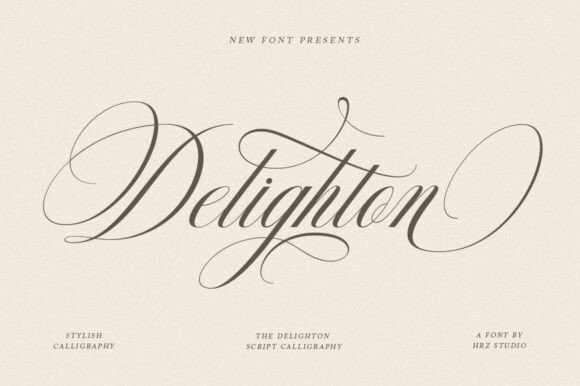
At its core, Delighton Script is a premium script font, but that simple label doesn’t do it justice. Imagine the fluidity of a traditional copperplate script, with all its elegant loops and connections, but refined for today’s aesthetic. It’s not a stiff, historical reproduction. Instead, it carries a modern touch in its proportions and spacing, making it feel accessible rather than archaic. The high detail is evident in every character; you can see the subtle variations in stroke weight that mimic the pressure of a skilled hand holding a dip pen. This isn’t a font generated by a simple algorithm; it feels designed, considered, and alive.
What truly sets it apart for practical use is its thoughtful construction. The designers understood that beauty alone isn’t enough. The font is built with many fancy letter connections that actually enhance readability, not hinder it. This is a common pitfall with many decorative script fonts—they look stunning in isolation but become a tangled mess in a sentence. Delighton Script maintains a smooth, clean flow that allows words to be read effortlessly, which is non-negotiable for anything from a restaurant menu to a website hero section. Furthermore, the inclusion of viable style alternatives for many letters is a game-changer. This means you can customize the look of a word or a name, ensuring it has the perfect rhythm and personality for your specific project. It prevents the dreaded “font fatigue” where every instance looks identical, offering instead a toolkit for unique expression.
From Brand Identities to Tangible Products: Real-World Applications
Let’s move beyond theory. Where does a typeface like this actually shine? Think about the projects where first impressions are everything, and where a brand’s personality needs to be communicated in an instant.
For logo design and brand identity, Delighton Script offers a distinct advantage. A logo sets the entire tone for a business. For a boutique hotel, a luxury skincare line, a high-end florist, or a specialty coffee roaster, this font can form the core of a visual identity that feels both established and approachable. Its classic foundation conveys tradition and quality, while its modern sensibility keeps it from feeling stuffy. It pairs beautifully with a clean, geometric sans serif font for body text, creating a hierarchy that is both visually striking and functionally sound.
Consider the world of packaging design. On a shelf crowded with minimalist, sans-serif labels, a product that uses an elegant, hand-lettered-style script immediately catches the eye. It suggests craftsmanship, care, and a premium experience. Whether it’s on a wine bottle, a artisan chocolate box, or a candle label, this font communicates quality before the customer even reads the product description. The same principle applies to print materials like business cards, letterheads, and brochures. A well-chosen script for headers or a company name can elevate the entire piece, making it feel more valuable and intentional.
In the digital realm, its applications are just as powerful. For social media graphics, a script font can add a human, emotional touch to quotes, announcements, or sale promotions. It breaks the monotony of standard digital fonts and can significantly increase engagement by making a post feel more personal. On a website or blog, it’s best used strategically—think hero section headlines, pull quotes, or the blog title itself—paired with a highly readable serif or sans-serif for the body copy. This creates visual interest and guides the reader’s eye, improving the overall user experience. For entrepreneurs creating digital products like planners, workbooks, or e-books, using a font like this for chapter titles or section headers adds a layer of professionalism and aesthetic appeal that customers appreciate.
Making It Work: Practical Advice for Your Project
Having a beautiful font is one thing; using it effectively is another. Here’s how to integrate a script typeface like Delighton into your workflow without common missteps.
First, always consider context and readability. A script font is rarely the right choice for long paragraphs of body copy, especially on screens. Its strength is in display use: headlines, logos, short phrases, and labels. Test it at the size you intend to use it. Will your audience be able to read “Grand Opening” or “Sarah & Michael” at a glance on a mobile screen? If not, simplify. The goal is elegance, not confusion.
Next, master the art of font pairing. This is where design magic happens. Delighton Script’s classic-modern hybrid style makes it a versatile partner. For a sophisticated, editorial look, pair it with a traditional serif font like Garamond or Baskerville. For a cleaner, more contemporary feel, a simple sans-serif like Lato, Open Sans, or even a bold geometric font creates a striking contrast. The key is to let the script be the star. Use it for one or two key elements, and let the supporting font handle the rest of the information. This creates visual consistency and prevents your design from looking chaotic.
Take advantage of the alternate characters. Don’t just type and forget. Most professional design software (like Adobe Illustrator, Photoshop, or even Canva Pro) allows you to access OpenType features. Explore the different swashes, ligatures, and letter endings available. Use them to avoid awkward letter combinations, to add a flourish to the beginning or end of a word, or to create a more harmonious flow in a name. This level of customization is what separates a generic use of a font from a truly integrated design.
Finally, be mindful of licensing. If you’re using this for a client project, a product you sell, or commercial advertising, you need to ensure you have the correct commercial license. Most premium fonts, including Delighton Script, come with clear licensing terms. This isn’t just a legal formality; it’s about respecting the work of the type designers who crafted the asset you’re using. Purchasing the proper license gives you peace of mind and supports the creative ecosystem.
The Subtle Power of the Right Choice
Choosing a typeface is rarely about finding the “best” font in a vacuum. It’s about finding the right voice for a specific message. Delighton Script excels in scenarios that call for a blend of warmth, sophistication, and approachable elegance. It doesn’t scream for attention; it invites it. It doesn’t follow fleeting trends; it offers a timeless quality with just enough modern flair to feel relevant. For the designer, business owner, or creator, it’s less of a flashy tool and more of a reliable collaborator—one that helps translate an idea of quality, care, and style into a visual reality that people can see and feel. In a landscape saturated with the bold and the brash, there’s a quiet power in choosing something that is, above all, beautifully considered.